Your standard, written down
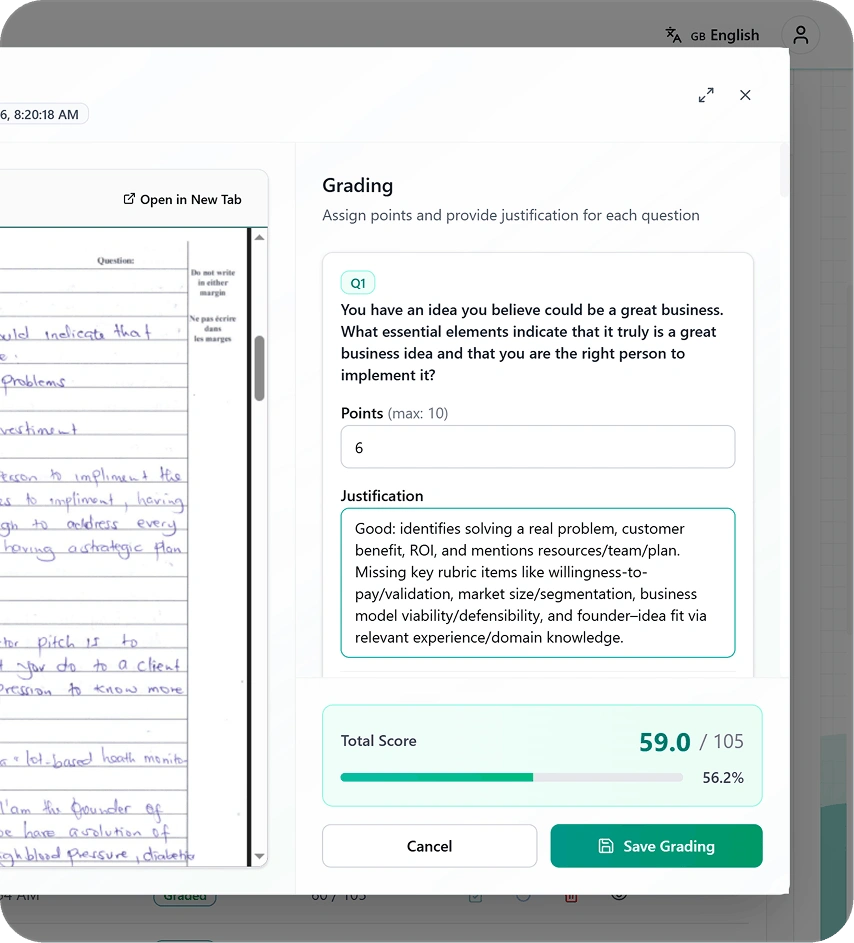
The rubric is drafted from your materials and approved by you. Once fixed, it is the same standard for every student answering that question.
- Built from your own content
- Weighted and editable
- Frozen after approval

Grades video answers against your own course materials — point by point, with the evidence attached. Every score can be explained.
examNET learns what a correct answer looks like from the materials you already teach from, turns that into a rubric you approve, and then applies it identically to every submission. You review reasoning instead of recordings.
Lecture notes, textbook chapters, guidelines, internal documentation. examNET reads your materials and treats them as the source of truth for what a correct answer contains.
For each question, examNET drafts a structured breakdown of what a complete answer should include, with weights. You edit and approve it — and from that moment it is fixed.
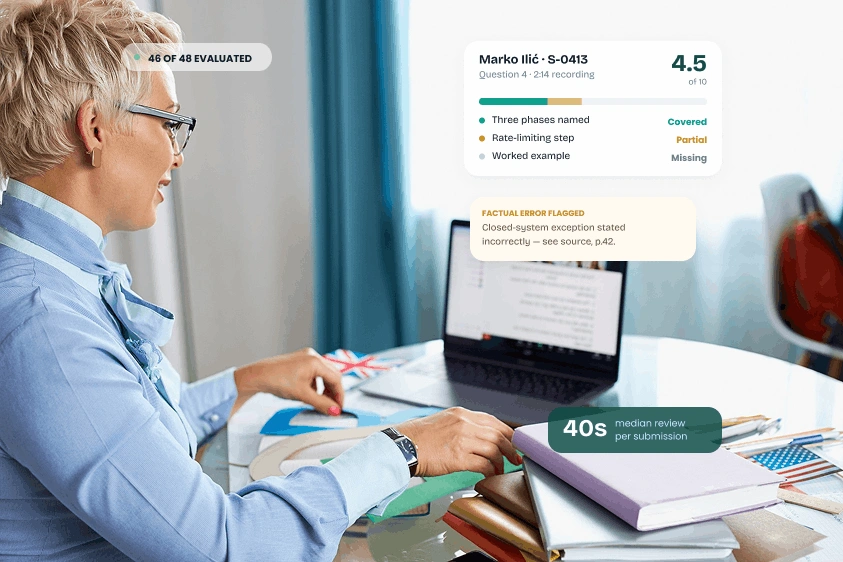
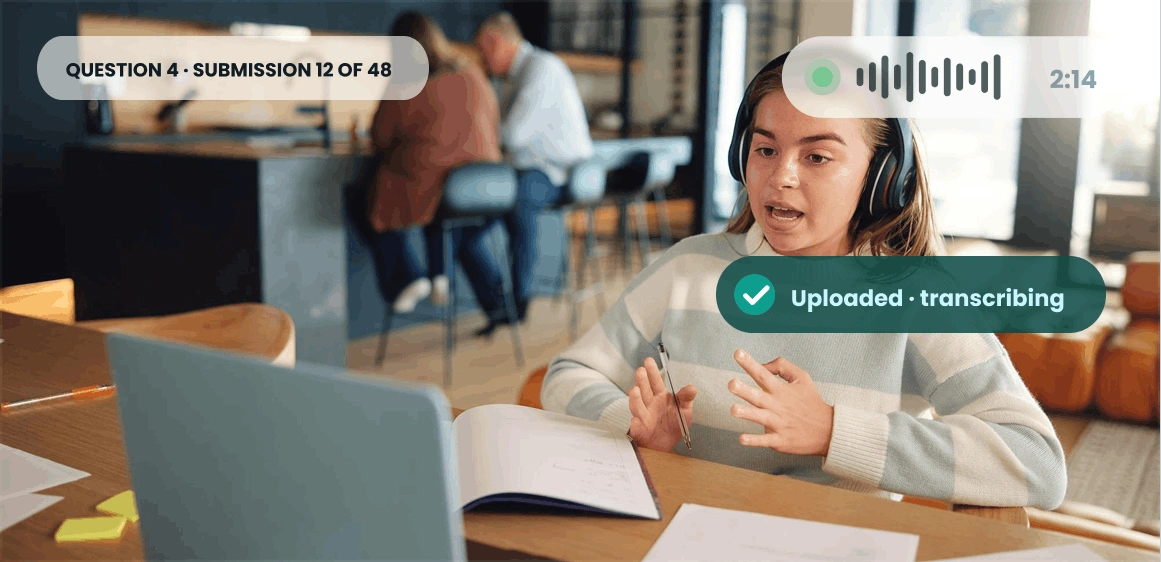
A student's video answer is transcribed, then measured against the approved rubric point by point: covered, partial, missing or contradicted — always tied to what was actually said.
A weighted score, the evidence behind it, the factual errors, the gaps, and any correct knowledge beyond the rubric. You confirm or adjust; the reasoning is already there.
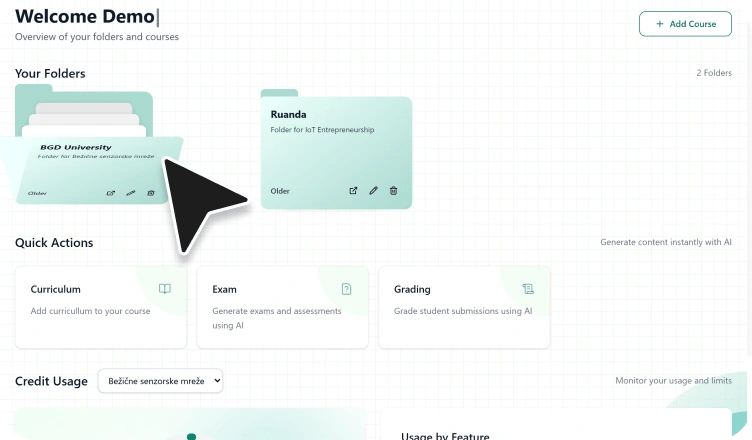
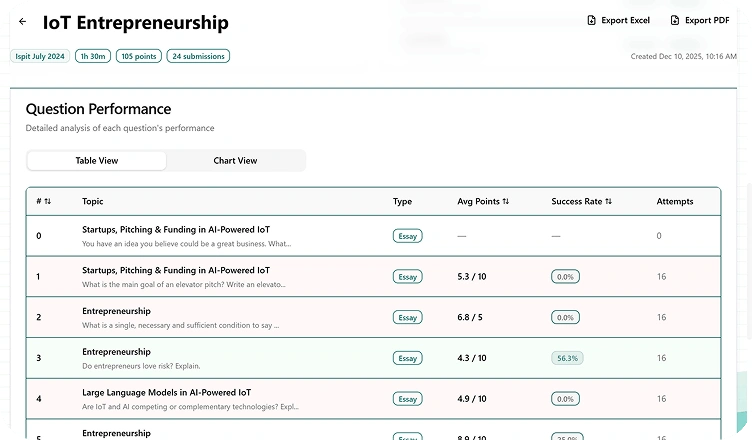
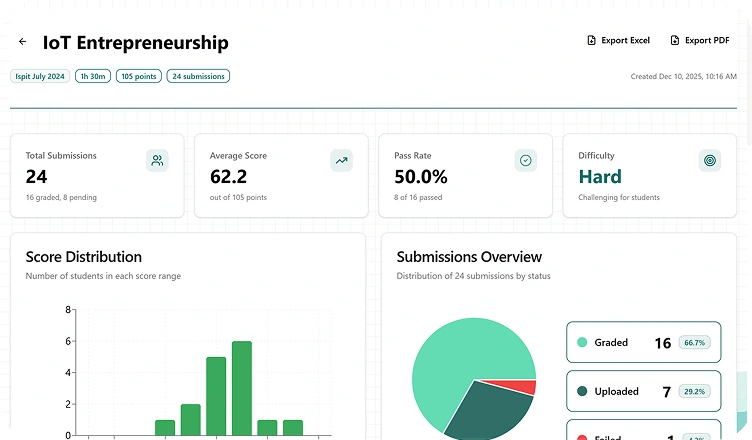
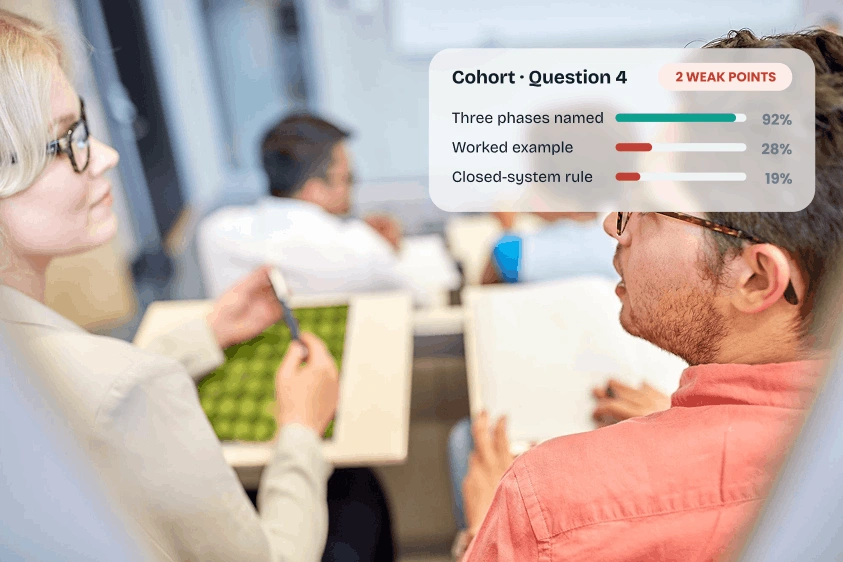
One workspace for the whole cohort: submissions and their status, the evidence trail behind every grade, cohort-level analytics on where the class fell short, and the rubric that produced it all.


examNET takes the watching, the transcribing and the comparing off the evaluator — running on the materials you already maintain and the standard you already set.
Grades need to land back in your LMS? Export and sync are scoped per institution against the interfaces your system exposes. Bring it up during the discovery call.
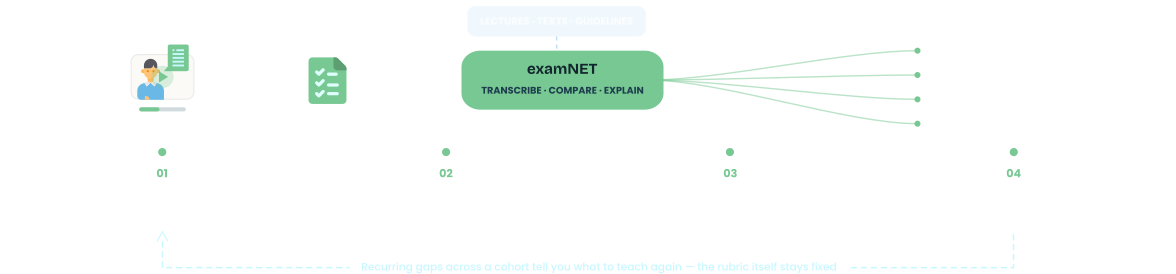
Your materials
Lectures · texts · guidelines
examNET
Drafts the rubric, you approve it
Student answers
Video and audio submissions
You
Evidence-backed reports to confirm
Forty-eight recordings, two minutes each, and a standard that quietly shifts somewhere around the thirtieth. examNET does the watching and the comparing; you do the judging.


The rubric is drafted from your materials and approved by you. Once fixed, it is the same standard for every student answering that question.
Each rubric point is assessed on its own — covered, partial, missing or contradicted — and tied to the exact statement from the student's answer.
The AI never assigns the number. It reports what was said and how it compares; the score follows fixed rules — so any grade can be traced and challenged.
Higher-education deployment · 2024 · figures from the pilot dashboard
"We moved oral examinations online and the marking time went up, not down. Now the reports arrive with the evidence already attached — I read, I agree or I adjust. And when a student asks why they lost two points, I can show them the sentence."
Course Coordinator
Faculty of Engineering · Novi Sad, Serbia
No. The AI identifies what the student said and how it compares to each rubric point. The score itself is calculated by fixed, predictable rules from those judgements — which is why two identical answers always receive the same number.
From your own materials. examNET reads the lecture notes, chapters and guidelines you already teach from and drafts a weighted breakdown of what a complete answer should contain. You edit and approve it; from that moment it is fixed for every student answering that question.
It is credited rather than discarded. Correct knowledge beyond the rubric is reported separately as extra insight, so you can decide whether it earns additional marks — the rubric score itself stays comparable across the cohort.
Transcription is automatic and the transcript stays attached to the report, so every judgement can be checked against the words it came from. Where audio is unclear the evidence quote shows it, and you can correct the transcript before confirming the grade.
Yes, and that is the point of the design. Every scored point links to the exact statement it was judged on, so a challenge is answered by showing the sentence and the rubric point rather than by re-watching the recording.
No. Anywhere spoken or video-recorded answers are assessed against a fixed standard fits — universities and colleges, but also certification bodies, professional training and internal competence assessment.
Transcription and evaluation cover the major European languages, and the rubric can be maintained in the language you teach in. Confirm your specific combination during the discovery call.
No — it removes the watching, transcribing and comparing. The AI never assigns the number; you confirm or adjust every grade, with the reasoning already assembled in front of you.
Submissions are processed in an ISO 27001-controlled EU cloud on Microsoft Azure, GDPR-compliant, with role-based access so only nominated reviewers reach a given cohort.
Pricing is scoped per institution against cohort size and how many questions you assess. We'll size it and give you rough figures in one 30-minute call.